
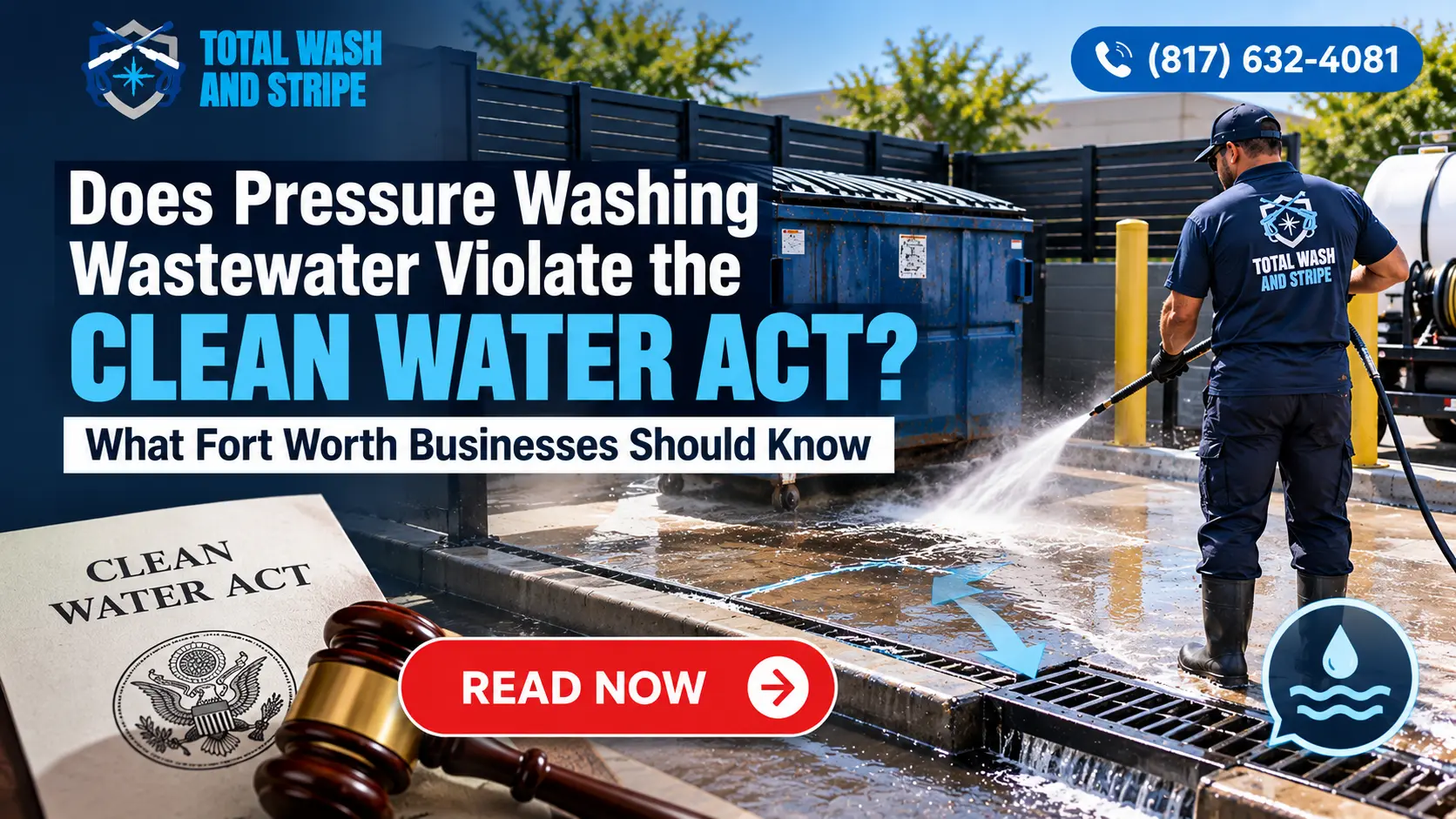
Pressure washing can improve a commercial property quickly, but the dirty water left behind matters just as much as the cleaned surface. Wash water may pick up detergent, grease, oil, food residue, sediment, and other material before flowing toward a curb or storm drain.
For business owners, pressure washing wastewater regulations in Texas involve more than the equipment a contractor uses. They also involve what the wastewater contains, where it goes, and which state or local rules apply.
Pressure washing wastewater does not automatically violate the Clean Water Act. Federal law generally regulates pollutant discharges from point sources into waters of the United States unless properly authorized. Texas administers this program through the Texas Pollutant Discharge Elimination System, or TPDES. Fort Worth also has local stormwater requirements that directly affect commercial pressure washing.
Water may start clean when it leaves a pressure washer, but it can become contaminated after contacting a commercial surface.
Wash water can collect:
If contaminated water leaves the property, it may reach a storm drain and eventually a local waterway.
Fort Worth's stormwater system is separate from its sanitary wastewater system. Water entering storm drains can travel to creeks, lakes, and rivers without receiving normal wastewater treatment.
That makes storm drain runoff pressure washing practices important. A nearby curb inlet should never be treated as a convenient wastewater disposal point.
The Clean Water Act created the NPDES program to control certain pollutant discharges. EPA explains that a point-source discharge of pollutants into waters of the United States generally requires authorization.
Texas assumed authority for this federal program and administers it through TPDES.
No. The answer depends on the type of discharge and where it goes.
For many Fort Worth businesses, the more immediate concern is following local stormwater rules and keeping polluted wash water out of the municipal storm-drain system.
Fort Worth defines mobile commercial cosmetic cleaning to include commercial pressure washing, power washing, and steam cleaning of exterior surfaces or vehicles.
Businesses performing mobile commercial cosmetic cleaning in Fort Worth are required to have the applicable City permit. Property owners using their own employees may not fall under that permit, but stormwater discharge restrictions still apply.
Commercial pressure washing compliance in Fort Worth should be planned before cleaning starts.
A responsible contractor should consider nearby drains, property slope, contaminants, cleaning products, water flow, and how wastewater will be contained or recovered.
Fort Worth states that wash water that does not qualify under limited discharge conditions must be collected before it leaves the property.
Depending on the site, contractors may use:
Restaurant dumpster pads and service areas may contain concentrated grease and oil. Fort Worth recommends addressing liquid oil or grease accumulations before washing.
Total Wash and Stripe provides dumpster pad cleaning and sanitation for commercial properties dealing with grease, food residue, grime, and recurring waste-area buildup.
Business owners should not assume it can.
Fort Worth has limited conditions or defenses for certain cosmetic-cleaning discharges, including some uncontaminated cold-water washing. The City also has specific conditions involving hot-water cleaning.
These exceptions are narrow. They should not be interpreted as permission to wash detergent, degreaser, grease, oil, food residue, or debris into a storm drain.
What matters is what the water contains after touching the surface.
Water running across a restaurant service lane, parking lot, dumpster pad, or loading area may collect pollutants before reaching the street. A professional cleaning plan should account for that change.
In some situations, sanitary-sewer disposal may be possible, but applicable Fort Worth requirements must be followed.
The City places conditions on cosmetic-cleaning wastewater entering the sanitary system, including controls involving grease, grit, and material that could clog pipes. Required permission or authorization should be confirmed before disposal. Fort Worth also specifically prohibits discharging through manholes.
A contractor should never treat a sewer manhole as an easy dumping point.
Before hiring a contractor, property managers can ask a few practical questions.
Confirm:
Watch for:
Afterward, make sure debris is removed and wastewater was handled appropriately.
Commercial pressure washing is more than making concrete look brighter. The contractor may be working around grease, detergents, storm drains, customers, and active traffic.
Ask potential providers how they control runoff, handle greasy areas, protect nearby drains, and manage recovered water.
Total Wash and Stripe offers commercial pressure washing services for Fort Worth area businesses. You can also view the Total Wash and Stripe project gallery and read Total Wash and Stripe reviews on Google.
The main lesson behind pressure washing wastewater regulations in Texas is simple: cleaning the surface is only part of the job.
Businesses should consider what is being removed, where the wash water travels, and which federal, state, or local requirements apply. In Fort Worth, preventing polluted runoff from entering the storm-drain system should be part of the cleaning plan from the beginning.
This is especially important for dumpster pads, restaurant service areas, parking surfaces, and other locations where grease, oil, food waste, or cleaning chemicals may be present.
If your property needs exterior cleaning, contact Total Wash and Stripe for a pressure washing estimate and discuss a site-specific cleaning plan.
Not automatically. The Clean Water Act generally regulates unpermitted point-source discharges of pollutants into waters of the United States. The answer for a particular job depends on the discharge, destination, and applicable requirements.
Texas administers the federal NPDES program through TPDES. State requirements can apply alongside municipal stormwater rules, so the location and type of discharge matter.
Do not assume it can. Fort Worth prohibits pollutant discharges to its storm-drain system and provides only limited conditions for certain cosmetic-cleaning discharges.
Fort Worth requires businesses engaged in mobile commercial cosmetic cleaning, including commercial pressure washing, to obtain the applicable City permit.
Identify drains before work starts, remove concentrated grease, use suitable containment or recovery equipment, control detergents, and keep contaminated water from leaving the work area.
Yes. Total Wash and Stripe provides commercial pressure washing and dumpster pad sanitation. Visit the Total Wash and Stripe FAQ for service information or request an estimate for your property.


